If you’re considering laser hair removal in Cochrane, you’ve probably wondered:
Why do I need multiple treatments? Why can’t we just treat all the hair at once? And how often should I actually be coming in?
The answer comes down to one thing: your hair growth cycle.
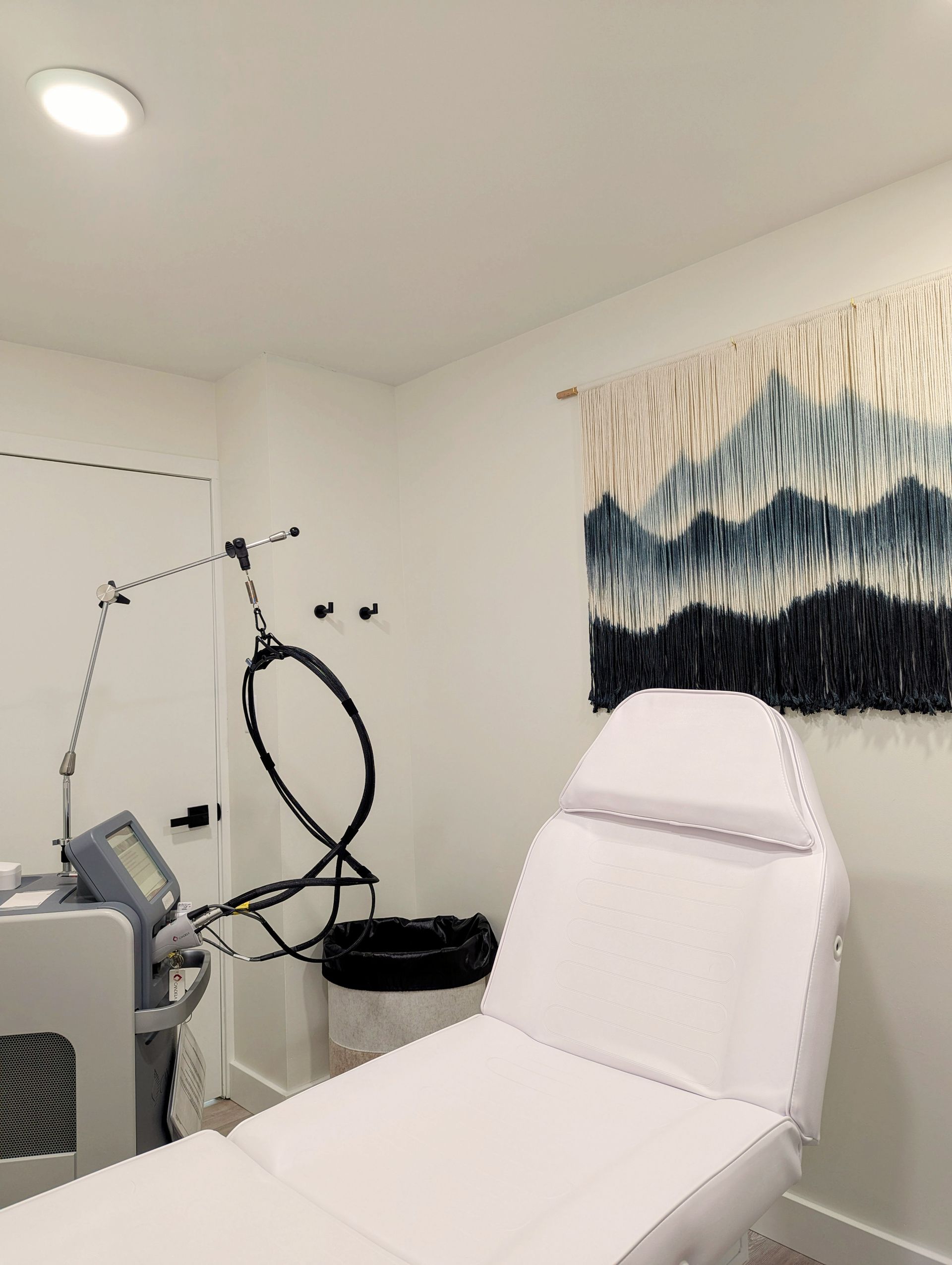
At Revivery & Co., we use the Candela GentleMax Pro, a professional dual-wavelength laser system, to target unwanted hair at the follicle. But laser hair removal isn’t about simply treating the hair you can see—it’s about catching hair follicles at the right stage of their growth cycle.
Understanding this cycle is one of the keys to getting better results from your laser hair removal treatments in Cochrane.
The 3 Stages of the Hair Growth Cycle
Every hair on your body moves through three primary stages:
1. Anagen — The Active Growth Phase
This is the stage we want to target.
During anagen, the hair is actively growing and contains more melanin (pigment). This pigment is what allows the laser energy to be absorbed and converted into heat, which damages the structures responsible for future hair growth.
This is why laser hair removal works best when the hair follicle is in its active growth phase.
The important part?
Not every hair follicle is in anagen at the same time.
That’s why one laser treatment can’t treat every hair follicle in an area.
2. Catagen — The Transition Phase
Catagen is a short transitional stage.
The hair stops actively growing and begins separating from the structures that support its growth. Because the follicle is no longer in its ideal active-growth state, it is not the optimal target for laser hair removal.
Eventually, the follicle moves into its resting phase.
3. Telogen — The Resting Phase
During telogen, the follicle is resting.
The existing hair will eventually shed, and the follicle will eventually return to an active growth phase.
This is one reason you may notice new hair appearing between laser treatments. It doesn't necessarily mean your treatment didn't work.
It may simply mean that a different group of follicles has entered its active growth phase.
Why You Need a Series of Laser Hair Removal Treatments
Think of your hair follicles like people arriving at a party at different times.
You can only treat the people who are there.
At your first laser appointment, some follicles will be in an ideal growth phase while others will be transitioning or resting. At your next appointment, a different group of follicles will be ready to target.
Over a series of treatments, we can catch progressively more follicles during their active growth phase.
That’s why consistency matters.
Your treatments aren't simply repeated because the laser "didn't work." They're scheduled to work with your body's natural hair-growth cycle.
How Often Should You Have Laser Hair Removal?
There isn't one universal schedule for every area of the body.
Hair grows at different rates depending on where it is located, which means your treatment interval should change depending on the area you're treating.
At Revivery & Co., typical treatment timing may look like:
Treatment AreaTypical Treatment IntervalUnderarmsApproximately 4–6 weeksBrazilian/BikiniApproximately 4–6 weeksFaceApproximately 4–6 weeksArmsApproximately 6–8 weeksLegsApproximately 8–12 weeks
These are general guidelines—not rigid rules.
As your treatments progress, hair growth becomes slower, finer and more sparse. That means your treatment interval may need to increase over time.
Coming in too early isn't necessarily better.
We want enough new growth to be present so we're treating follicles when they're actually ready to respond.
Why You May See Hair Between Treatments
One of the most common questions we hear is:
"I had laser and now I see hair growing again. Did it not work?"
Not necessarily.
Following treatment, treated hairs can take days or even weeks to shed. Other follicles that weren't in the ideal growth phase during your treatment may begin producing visible hair afterward.
This is completely different from the treatment failing.
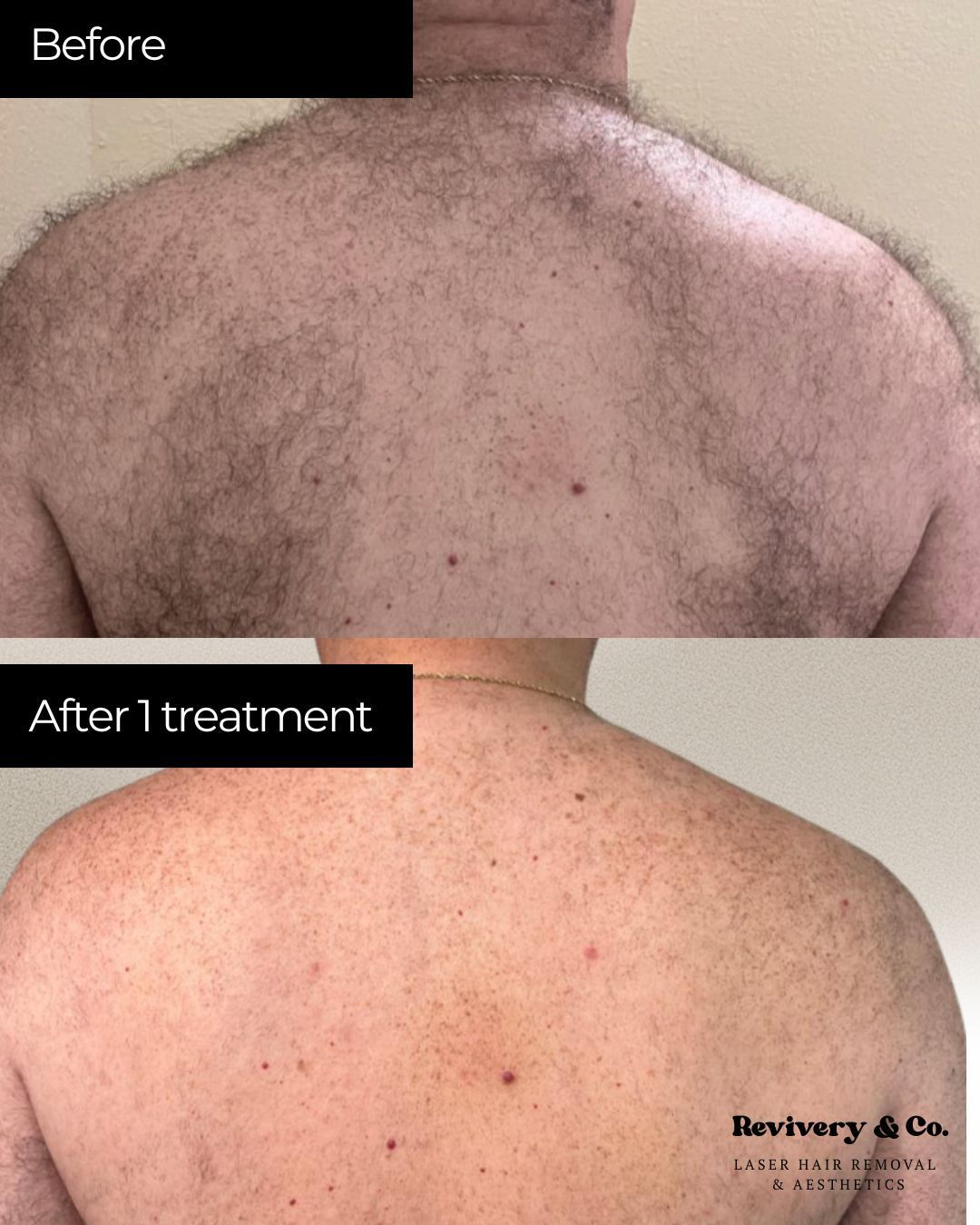
Over time, successful treatment should result in:
- Less hair growth
- Slower regrowth
- Finer hairs
- Less dense hair
- Less frequent shaving
- Fewer ingrown hairs for many clients
The goal is progressive, long-term hair reduction, not instant removal of every hair after one appointment.
What Hair Can Laser Hair Removal Treat?
This is an important question to ask before purchasing a laser hair removal package.
Laser hair removal works by targeting melanin, the pigment in the hair. This means hair colour has a major impact on treatment results.
Best candidates generally have:
✔ Black hair
✔ Dark brown hair
✔ Medium brown hair
✔ Coarse, pigmented hair
The more pigment the hair contains, the better the laser has a target to absorb the energy.
What Hair Doesn't Respond Well to Laser?
White Hair
White hair generally cannot be effectively treated with laser hair removal.
White hair contains little to no melanin for the laser to target.
Grey Hair
Grey hair is also generally a poor candidate because it has significantly reduced pigment.
Very Light Blonde Hair
Very light blonde hair may not contain enough pigment to absorb sufficient laser energy, making treatment ineffective or inconsistent.
Red Hair
Red hair can also be challenging because the type and amount of pigment present is different from the melanin that laser hair-removal systems are designed to target.
The American Academy of Dermatology notes that laser hair removal does not effectively target blonde, white, gray or red hair.
This is why we assess your hair colour, density and texture before beginning a treatment series.
We would rather be honest about whether you're a good candidate than sell you a package that isn't likely to give you the results you're looking for.
What About Fine or Peach-Fuzz Hair?
Hair colour isn't the only consideration.
Hair thickness matters too.
Coarse, terminal hairs generally contain more pigment and are better targets for laser energy. Very fine, vellus-type hairs contain less pigment and may respond poorly, even when they appear dark.
This is particularly important when discussing areas such as the face.
That's why "dark hair" doesn't automatically mean "ideal laser hair."
During your consultation, we'll assess the actual hair you're wanting treated.
Why We Use the Candela GentleMax Pro
At Revivery & Co., we use the Candela GentleMax Pro, a professional laser platform that combines two wavelengths:
Alexandrite 755 nm
The Alexandrite wavelength is highly absorbed by melanin and is commonly used for laser hair removal when the skin and hair combination is appropriate.
Nd 1064 nm
The Nd wavelength penetrates deeper and is less strongly absorbed by epidermal melanin, making it an important option when treating appropriately selected clients with darker skin tones.
Having two wavelengths allows us to select the technology that is most appropriate for your skin type, hair characteristics and treatment area, rather than relying on a one-size-fits-all approach.
And that's important because not all lasers are created equal—and neither is every treatment plan.
Why Your Laser Technician Matters
The machine is only one part of the equation.
Successful laser hair reduction depends on factors including:
- Your skin type
- Your hair colour
- Hair thickness
- Treatment area
- Hair growth cycle
- Laser wavelength
- Treatment settings
- Timing between treatments
- Sun exposure
- Your individual response to treatment
A quality laser combined with appropriate settings, proper assessment and a treatment plan tailored to you is far more meaningful than simply choosing a clinic because they offer "laser hair removal."
Why Shaving Is Recommended Between Treatments
Shaving is generally the preferred method of hair removal between laser sessions.
Why?
Because shaving removes the visible portion of the hair while leaving the follicle intact—exactly where we want it.
Waxing, tweezing and epilating remove the hair from the follicle, which means there may be less of a target available when you're ready for your next laser treatment.
So yes, you can shave between laser treatments.
In fact, shaving is usually encouraged.
When Will You See Results?
Laser hair removal is a process.
You may notice changes after your first few treatments, but meaningful hair reduction typically develops over a series of sessions.
As treatments progress, many clients notice that they don't need to shave as frequently and that the remaining hair becomes finer and less dense.
The number of treatments needed varies depending on the treatment area, hair characteristics, hormones and individual response. Some areas—particularly the face—can also behave differently from body hair.
Laser hair removal can provide significant, long-lasting reduction, but no reputable provider should promise that every hair will be gone forever. Maintenance treatments may be needed over time.
Ready to Stop Shaving?
If you're tired of shaving, waxing, dealing with razor burn or constantly battling unwanted hair, laser hair removal may be worth exploring.
At Revivery & Co. Laser Hair Removal & Aesthetics in Cochrane, Alberta, we take the time to assess your skin and hair before recommending a treatment plan.
We use the Candela GentleMax Pro and customize your treatment based on your individual needs—not a generic schedule.
Serving Cochrane & surrounding communities
If you're searching for laser hair removal in Cochrane, AB, we'd love to help you determine whether you're a good candidate.
Book your laser hair removal consultation at Revivery & Co. and let's talk about your hair, your goals and what you can realistically expect from treatment.
Frequently Asked Questions About Laser Hair Removal in Cochrane
How many laser hair removal treatments will I need?
The number varies from person to person and depends on the area, hair colour, hair thickness, hormones and individual response. A series of treatments is required because follicles are in different stages of the growth cycle at different times.
How often should I get laser hair removal?
Treatment intervals depend on the area being treated. Facial hair generally grows through its cycle faster than leg hair, so facial treatments are typically scheduled more frequently than leg treatments.
Does laser hair removal work on blonde hair?
It depends on the shade. Darker blonde hair may contain enough pigment for some response, but very light blonde hair generally does not provide enough melanin for reliable treatment.
Can you laser white or grey hair?
Generally, no. White and grey hairs have little or no melanin, which means the laser doesn't have enough pigment to effectively target the follicle.
Does laser hair removal work on red hair?
Red hair can be difficult to treat and results can be inconsistent because of its pigment characteristics.
Can I shave between laser treatments?
Yes. Shaving is generally preferred because it leaves the follicle intact for your next treatment.
Why can't I just come every week?
Because the goal isn't simply to treat visible hair. We want to treat follicles when they're in the appropriate stage of their growth cycle. Coming too frequently may mean fewer follicles are at the ideal stage for treatment.
Is the GentleMax Pro good for laser hair removal?
The Candela GentleMax Pro is a professional dual-wavelength laser platform designed for applications including hair removal. The appropriate wavelength and settings depend on your skin type, hair characteristics and treatment area.
Laser hair removal works with your hair-growth cycle—not against it.
The right technology, the right timing and the right treatment plan can make a significant difference.
Ready to put down the razor?
Book your laser hair removal consultation at Revivery & Co. in Cochrane, Alberta.